
Zigbee networking connects your smart home devices in a mesh network, ensuring reliable and secure communication. This technology allows devices to reach each other directly or through intermediary nodes, improving connectivity and resilience.
In this article, we’ll delve into how Zigbee networking works, its essential components, and its benefits, like low power consumption and easy setup, making it ideal for smart home automation.
Key Takeaways
- Zigbee technology utilizes a standardized wireless protocol to create secure and efficient mesh networks for smart devices, enhancing communication and connectivity.
- The key components of a Zigbee network include the Coordinator, Routers, and End Devices, which work together to provide extensive coverage and ensure reliable communication.
- Zigbee’s advantages include low power consumption, self-healing capabilities, and enhanced range, making it a suitable choice for various smart home applications and energy management systems.
Understanding Zigbee Networking
Zigbee technology is a standardized wireless communication protocol designed to connect smart devices efficiently and securely. It serves various markets, including residential, commercial, and utility/energy sectors.
The primary allure of Zigbee lies in its ability to create robust and reliable mesh networks, where devices can communicate directly or through intermediary nodes, enhancing connectivity and network resilience, as outlined in the zigbee specification.
Zigbee networks employ encryption algorithms like AES-128 to safeguard against unauthorized access, a vital feature for protecting sensitive data in smart homes and ensuring a zigbee secure environment.
Understanding Zigbee’s workings will clarify its significance in smart home technology.
What Is Zigbee?
Zigbee is a low-power wireless technology designed to enable seamless communication between smart devices, making it an ideal choice for smart homes. Its primary function is to link devices such as lights, plugs, and locks to a home automation network, allowing for centralized control and automation.
Operating on a 2.4 GHz frequency, Zigbee is optimized for low power consumption, which is perfect for battery-operated devices.
Zigbee technology significantly boosts communication and battery life for connected devices, making it a preferred choice for energy-efficient and reliable zigbee device, smart lights, and zigbee smart devices in smart home applications. It creates a seamless integration of these devices using zigbee chips, zigbee ip, and zigbee specifications.
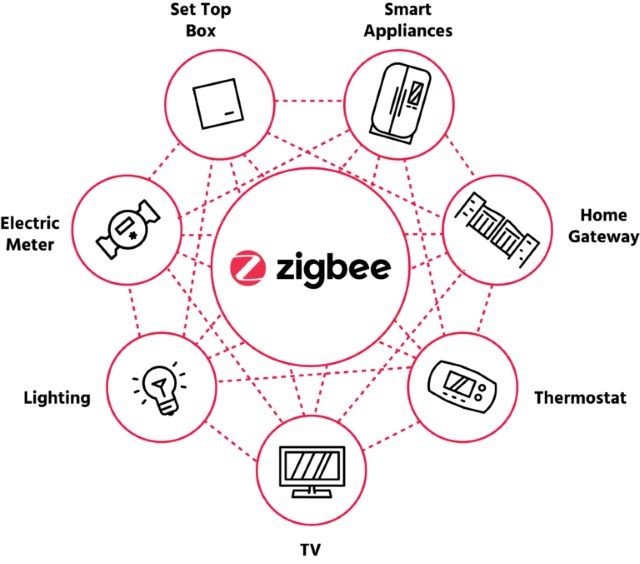
The Zigbee Alliance oversees the development and certification of Zigbee products, ensuring interoperability and adherence to standards.
How Does Zigbee Work?
Zigbee facilitates intercommunication between various smart devices, creating a seamless network for automation. One of the core features of Zigbee networks is their use of mesh topology, which enhances connectivity by allowing devices to act as routers.
This topology enables self-discovery and adaptive routing, ensuring that devices can send, receive, and forward messages, thereby enhancing the network’s reliability.
When Zigbee devices communicate, they connect via peer-to-peer connections, allowing them to transmit data without needing to be close to the hub. This is facilitated by the Zigbee Coordinator, which acts as the central node for device integration.
Components like coordinators, routers, and end nodes are essential for establishing a functional Zigbee mesh network. Additionally, Zigbee uses carrier sense multiple access with collision avoidance (CSMA/CA) to ensure that transmission channels are clear before data is sent.
The mesh network created by Zigbee is robust and reliable, as devices can extend their range through daisy chaining and forwarding messages to one another, ensuring constant connectivity. This capability makes Zigbee an excellent choice for large homes or spaces where devices need to communicate over longer distances.
Key Components of a Zigbee Networking

A Zigbee network comprises several key components that work together to create a seamless and efficient communication system. These include the Zigbee Coordinator, Router, and End Device. Each component plays a crucial role in maintaining the network’s integrity and functionality.
The Zigbee Certified logo signifies certification for interoperability with other certified products and conformance to Alliance specifications.
A Zigbee network can support hundreds of other nodes per network, providing extensive coverage and connectivity. Factors influencing the logical size of a Zigbee network include frequency band, communication frequency, and acceptable data loss.
With broad global support from leading utilities, energy service providers, and product manufacturers, Zigbee technology continues to be a reliable choice for smart home setups.
Zigbee Coordinator
The Zigbee Coordinator serves as the central node managing the Zigbee network, ensuring effective communication among devices. Only one coordinator device is required per Zigbee network, which simplifies the overall architecture. End devices typically rely on the Coordinator or Routers for all routing functions and communication within the network.
A smart hub acting as the central Coordinator ensures seamless interoperability, crucial for maintaining the network’s stability and efficiency, making smart hubs indispensable.
Zigbee Router
Routers in a Zigbee network are powered devices that relay data between other devices, effectively extending the network’s coverage. These range extenders help to maintain a robust and reliable network by ensuring that signals can reach further devices. Spacing Zigbee devices 10-20 meters apart maintains effective communication.
The strategic placement of routers is crucial for creating a robust mesh network. By relaying data packets between devices, routers play a vital role in enhancing the network’s range and reliability, ensuring that all connected devices can communicate seamlessly.
Zigbee End Device
Zigbee End Devices, usually battery-powered and designed for specific tasks, do not repeat or forward signals. This makes them ideal for applications like buttons and sensors that prioritize low power consumption over constant communication.
End Devices are perfect for applications demanding energy efficiency, like battery-operated sensors, as their design supports extended operation on minimal power consumption, making them ideal for a single device among low power devices in smart homes prioritizing battery life and battery powered devices.
Advantages of Zigbee Mesh Networks

Zigbee mesh networks offer several advantages that make them highly suitable for smart home applications and home network setups. These include enhanced range and reliability, self-healing capabilities, and low power consumption. The mesh networking feature allows devices to connect to each other directly, enhancing communication without relying solely on a central hub.
Zigbee’s adaptability enables it to function in various topologies based on application needs. This flexibility is crucial for maintaining network robustness and ensuring continuous communication even in challenging environments.
Enhanced Range and Reliability
Zigbee’s mesh topology facilitates multiple connections among devices, enhancing network redundancy and reliability. The network can cover a wide area by utilizing intermediate devices to relay signals, significantly extending its range. This capability is particularly useful in large homes or buildings where devices are spread out over a significant distance.
Routers play a crucial role in creating mesh networks by forwarding data packets between devices. Adding multiple Zigbee routers can significantly improve network coverage and reliability by creating a robust mesh network. Operating in sub-GHz frequencies can also enhance signal strength and range for Zigbee devices.
Self-Healing Capabilities
Self-healing in Zigbee networks allows for automatic re-routing around failed devices, maintaining functionality and continuous communication by adjusting routing paths to adapt quickly to failures.
In the event of a connection node failure, Zigbee’s automatic data retransmission features ensure message integrity and maintain overall network reliability.
Low Power Consumption
Zigbee’s design prioritizes energy efficiency, allowing devices to operate for extended periods on minimal power. Compared to Wi-Fi, Zigbee requires significantly less energy, consuming about 25% of the power needed for Wi-Fi networks. This low power consumption enables Zigbee devices to maintain a connection over longer periods.
Zigbee devices can last several years on a single battery due to their low power requirements. This makes Zigbee ideal for applications where battery life is essential, such as in sensors.
The efficiency of Zigbee technology ensures that smart home devices can operate reliably without frequent battery replacements.
Common Applications of Zigbee Networking

Zigbee is extensively used in various applications, particularly in smart homes, due to its capacity to control a variety of devices seamlessly. Superior connectivity and reliability make Zigbee essential for a smart home. Additionally, Zigbee networks serve important functions in energy management through applications like smart meters and home area networks.
The ability of Zigbee networks to maintain functionality during device failures is crucial for critical applications like security. This reliability ensures that smart homes can continue to operate smoothly even if some devices go offline.
Home Automation Devices
Common Zigbee-enabled devices include:
- Lights
- Door locks
- Smoke detectors
- Fans
- Appliances
Numerous devices that are Zigbee-certified are associated with smart homes. This includes a variety of products from Aqara. Major smart home ecosystem providers like Signify and Amazon utilize Zigbee technology for their products.
Zigbee is better suited for smart home automation due to its mesh networking capabilities, allowing for extensive device interaction. This capability ensures that all connected devices can communicate seamlessly, providing a harmonious and automated living experience.
Energy Management Systems
Zigbee supports smart energy solutions, improving energy use control across devices. By minimizing radio active time, Zigbee reduces power usage, essential for applications like smart meters requiring long battery life.
Zigbee devices are notoriously affordable, making them an appealing option for managing energy use effectively. Their low power consumption and cost-effectiveness make them ideal for widespread adoption in smart home energy management systems, ensuring that homes can reduce their energy footprint without incurring high costs.
Industrial Control Systems
Zigbee is a low-power wireless technology that enables reliable communication between a variety of devices, making it suitable for industrial control systems.
Zigbee networks are increasingly used in industries for applications such as remote monitoring, process automation, and IoT (Internet of Things) integrations. The robustness of Zigbee’s mesh networking allows for extensive coverage and reliable communication in complex industrial environments.
With industries increasingly embracing industrial automation, Zigbee integration is expected to grow, enhancing data collection, process optimization, and operational efficiency, ensuring stable communication in demanding environments.
Setting Up Your Zigbee Network
Setting up a Zigbee network involves several key steps, from choosing a compatible hub to optimizing network performance. Choosing a compatible Zigbee hub is vital, as it coordinates the network. Ensure the hub supports the devices and features required for your smart home configuration.
To add Zigbee devices, put the hub into pairing mode and follow the device instructions for integration. Positioning devices strategically to minimize obstacles and interference will help optimize network performance, ensuring a strong and reliable signal.
Choosing a Zigbee Hub
When selecting a Zigbee hub, consider its compatibility with various Zigbee devices to ensure seamless integration. Choose a hub that supports the latest Zigbee protocols for compatibility with a wide range of devices. Ensure the hub is compatible with the specific Zigbee version you plan to use, as some devices may be limited to certain versions.
Selecting the right Zigbee hub is crucial as it acts as the coordinator for the network. A well-chosen hub will ensure that all devices can communicate effectively, providing a reliable and efficient smart home setup.
Adding Zigbee Devices
To pair new Zigbee devices, follow these steps:
- Reset the devices to factory settings according to the manufacturer’s instructions before they can be added.
- Once reset, put the hub into pairing mode.
- Follow the device instructions for integration.
This process ensures that each device and other network devices are properly connected to the network, allowing for seamless communication and control.
Adding Zigbee devices requires attention to detail for correct pairing, ensuring smooth network function and centralized control of all connected devices.
Optimizing Network Performance
Central placement of the Zigbee hub enhances connection strength across devices by minimizing obstacles and interference. Strategically positioning devices leverages mesh networking to improve range and reliability.
Optimizing network performance is crucial for maintaining a reliable and efficient Zigbee network. By ensuring that devices are well-placed and free from interference, you can maximize the effectiveness of your smart home setup.
Security in Zigbee Networks
Security is vital in Zigbee networks, with the Coordinator managing network parameters and settings. Security is ensured through AES-128 encryption, authentication, and additional features, protecting against unauthorized access and ensuring data integrity.
Zigbee’s security architecture includes encryption and integrity features, with a trust center for 128-bit key distribution. The latest Zigbee PRO version enhances security, improves hub-centric network operation, and supports additional frequencies.
AES-128 Encryption
Zigbee networks utilize AES-128 encryption as their standard for securing communications. This symmetric 128-bit AES encryption method ensures that data transmitted across the network is protected from unauthorized access. By employing AES-128 encryption, Zigbee secures data during transmission, providing a robust layer of security for smart home devices.
The use of AES-128 encryption is a key feature that sets Zigbee apart in terms of security. This encryption method ensures that all data transmitted within the network remains secure, protecting sensitive information from potential threats.
Secure Key Management
Keys in Zigbee security mechanisms protect keying material, with security applied at various levels, including application, network, and MAC frames. Key management is implemented through master and link keys, with secure initial master key acquisition.
The trust center in Zigbee networks is responsible for distributing security keys and maintaining the network key. This centralized management ensures that all devices within the network can securely communicate, maintaining the integrity and security of the entire system.
Addressing Interference
To enhance the stability of a Zigbee network, it’s crucial to minimize sources of electromagnetic interference near the coordinator. Zigbee utilizes 16 separate 5MHz channels, CSMA-CA protocol, automatic data retransmission, and power measurements to ensure stable communication and minimize interference.
Proactively addressing interference allows Zigbee networks to maintain robust communication, ensuring smooth operation of all connected devices and a seamless smart home experience.
Comparing Zigbee to Other Wireless Protocols
Comparing Zigbee to other wireless protocols highlights its unique advantages and differences. Zigbee’s network standardization guarantees compatibility among different products and services.
The integration of Zigbee with Matter is designed to improve device compatibility across various smart home ecosystems. Smart home ecosystem providers that use Zigbee solutions include Amazon Echo Plus, Samsung SmartThings, and Philips Hue.
Comparing Zigbee to other protocols offers insights into its advantages, helping users make informed decisions for their smart home setups.
Zigbee vs. Wi-Fi
Zigbee consumes much less electricity than Wi-Fi, making it ideal for battery-operated devices, though it typically operates at a shorter range (up to 30 meters indoors). Zigbee supports more connected devices than Wi-Fi, offering greater flexibility for smart homes.
Zigbee’s low power consumption and high device support make it ideal for energy-efficient smart homes with extensive device integration, while IEEE 802.15.4 and Wi-Fi suit applications needing longer-range communication.
Zigbee vs. Z-Wave
Zigbee operates primarily on the 2.4 GHz frequency, while Z-Wave primarily uses the 900 MHz frequency, resulting in different propagation characteristics. Zigbee supports more devices than Z-Wave, leading to greater flexibility in smart home setups. However, Zigbee generally uses more power than Z-Wave, which may impact battery-operated devices over time.
Frequency and power usage differences highlight each protocol’s unique advantages. Zigbee offers greater device support, while Z-Wave’s lower power consumption may suit certain applications better, helping users choose the best protocol for their needs.
Zigbee vs. Bluetooth
Zigbee and Bluetooth both enable local communications in IoT, making them suitable for various smart home applications.
However, Zigbee’s mesh networking capability and lower power consumption make it a more reliable choice for extensive smart home setups. Bluetooth, while effective for short-range communication, lacks the same level of network scalability and efficiency.
Choosing between Zigbee and Bluetooth depends on the smart home setup’s specific requirements. For extensive networks needing reliable communication and low power consumption, Zigbee is often better.
Future Trends in Zigbee Technology
The future of Zigbee technology looks promising, with ongoing advancements aimed at enhancing smart home experiences. Zigbee PRO in 2023 is designed to benefit residential, commercial, and energy sectors, providing robust enhancements for smart home integration. Regular updates ensure that users receive ongoing improvements and new features for their smart home devices.
Future advancements in Zigbee technology aim to enhance device communication and interoperability, making smart homes more efficient and user-friendly, signaling a bright future driven by continued innovation.
Integration with Matter
Bridging devices enable seamless experiences across Zigbee and Matter networks. This integration will improve device compatibility across various smart home ecosystems, making it easier for users to connect and control their devices. The collaboration between Zigbee and Matter represents a significant step toward a more unified smart home experience.
Integrating with Matter ensures seamless operation of Zigbee devices with other smart home technologies, providing a more cohesive and efficient system, enhancing overall functionality and user experience.
Improvements in Zigbee PRO
Zigbee PRO 2023 is a major revision of the Zigbee protocol that adds new security features, supports SubGHz frequencies, and introduces Bluetooth Low Energy for device onboarding. The 2023 update includes enhanced security features specifically for device onboarding and operation, and it is certified by the Connectivity Standards Alliance.
These improvements ensure that Zigbee remains at the forefront of smart home technology, providing users with a secure, reliable, and efficient network. The enhancements in Zigbee PRO 2023 will further solidify Zigbee’s position as a leading choice for smart home applications.
Expansion into Sub-GHz Bands
Zigbee’s potential expansion into sub-GHz bands offers a promising alternative to its traditional operation in the crowded 2.4 GHz frequency space. Operating in sub-GHz frequencies allows Zigbee to achieve significantly enhanced range, making it suitable for larger areas and improving penetration through obstacles.
This expansion will enable Zigbee networks to maintain self-healing capabilities and low power consumption, ensuring stable and efficient communication.
The benefits of sub-GHz frequencies will make Zigbee even more versatile and effective for various smart home applications. This expansion will enhance the overall performance and reliability of Zigbee networks, providing users with a more robust and efficient smart home setup.
Summary
In summary, Zigbee networking offers a powerful and efficient solution for smart home setups. Its mesh networking capabilities, low power consumption, and robust security measures make it an ideal choice for connecting a variety of smart devices.
With ongoing advancements and integration with Matter, Zigbee continues to evolve, providing users with a seamless and reliable smart home experience. Embrace the future of smart home technology with Zigbee and transform your living space into a harmonious and automated environment.
Frequently Asked Questions
What is Zigbee, and how does it work?
Zigbee is a low-power wireless technology that facilitates communication between smart devices by operating on a 2.4 GHz frequency and utilizing mesh networking for improved connectivity and reliability. Its design allows for efficient and effective communication in smart home environments.
What are the key components of a Zigbee network?
The key components of a Zigbee network are the Coordinator, which serves as the central node, Routers that relay data, and End Devices that execute specific functions. Each component plays a critical role in ensuring efficient communication within the network.
What are the advantages of Zigbee mesh networks?
Zigbee mesh networks provide enhanced range and reliability, self-healing capabilities, and low power consumption, making them an excellent choice for smart home applications. Their robust features ensure seamless connectivity and efficiency in various environments.
How do I set up a Zigbee network?
To set up a Zigbee network, begin by selecting a compatible hub and then add devices by resetting them to factory settings. It is crucial to optimize performance by placing devices strategically to minimize obstacles and interference for a strong network.
How does Zigbee ensure security in its networks?
Zigbee ensures security in its networks through AES-128 encryption and robust key management, which effectively safeguard against unauthorized access and maintain data integrity. These security measures are crucial for protecting sensitive information within the network.